11 Email Marketing Best Practices Every Marketer Should Know
Email marketing may seem insignificant if you have a small subscriber list or are just starting in business.
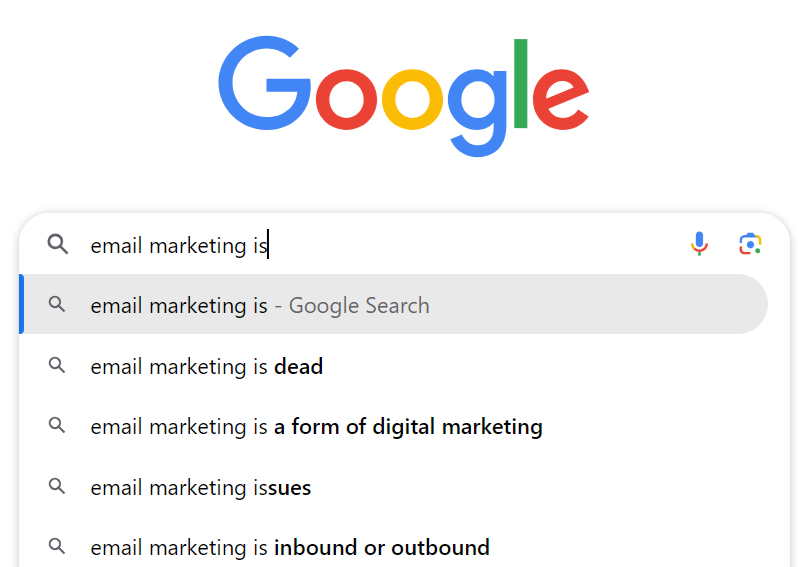
If you Google "Email marketing is...", the first suggestion is "dead."
Well, statistics tell otherwise.
Email drives an ROI of $36 for every dollar spent, 36 times higher than any other channel!
In this quick guide, I want to show you the best practices for improving your email marketing results, with examples.
1. Mention Their Name throughout.
2. Segmentize based on channels and sources
3. Optimise font size for mobile view
4. Optimize "Welcome Email" series
5. Insert multiple call to action (CTA)
6. Hyperlink using brand colour
7. Include a small logo on top
8. Write only 1 to 2 sentences per paragraph
9. Get them to reply to your email
10. Use bullet points and emojis
11. Remove non-open or non-active subscribers
1. Mention Their Name throughout.
Address the recipient by name using the CRM personalisation feature throughout the email.

Example, mention their name in the subject headline, within the email copy, and one more at the end of the email.
Here's a simplified example version to give you a perspective:
Alex, What Specific Challenge Do You Have?
Email Body:
I know times are tough, don't you think so, Alex?
PS: We're in this together Alex.
Over the coming weeks, I will send you tutorials on pivoting during this challenging time.
2. Segmentise based on channels and sources
Separate your subscriber list by funnel and channel.
For example, you could have a list for:
- Subscriber list who downloaded your eBook.
- Subscriber list who signed up for your newsletter on the website.
- Subscribe list who are active and inactive.
The idea here is to allow you to customise the email content based on how they have interacted with your business, so you can then launch a more targeted and personalised email campaign afterwards.
3. Optimise font size for mobile view
85% of people use their smartphones to access email.
So, use a 14-16px font size when writing your email.
Optimize the below, which could compromise readability.
4. Optimise "Welcome Email" series
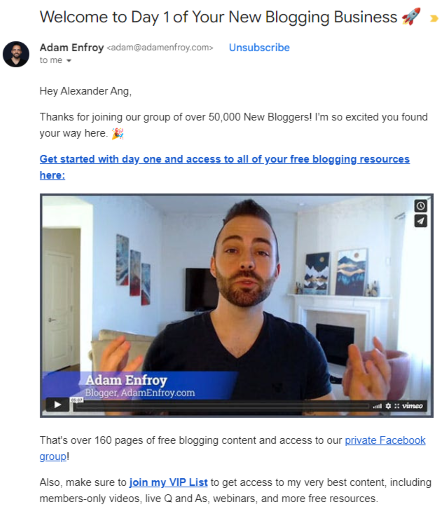
A welcome email has the highest open rates compared to other content emails.
Because it is new, and people are excited about what you would send to them, make it count!
Take some time to write an engaging welcome email that welcomes your subscribers and includes valuable resources.
This method could increase your open rate afterwards for the second and third emails.
5. Insert multiple call to actions (CTA)
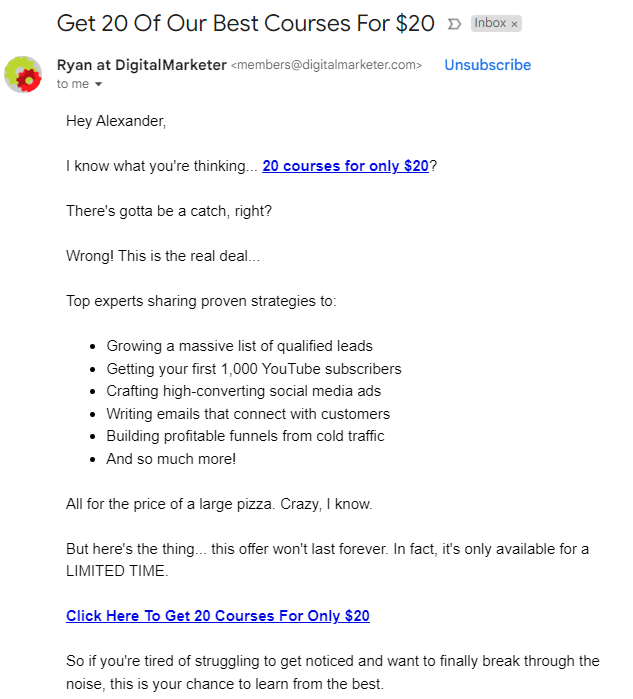
Depending on your email's length, this point is debatable.
Some businesses prefer to have one at the bottom; others prefer a few within an email.
It allows the reader to click conveniently while reading your email, without having to find the link again or have to scroll to the bottom.
6. Hyperlink using brand colour
Get people to remember your brand through colours.
Let me give you an example.
- When you see yellow, what's the first brand that comes to your mind?
7. Include a small logo on top
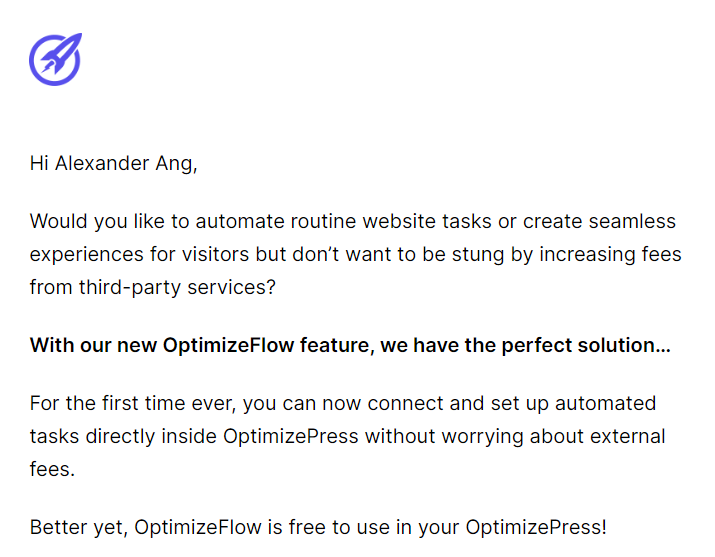
Keep the logo size below 100KB, with 150-250 pixels.
Otherwise, it risks going into spam.
I suggest adding the logo to the header, just below your email signature, or to the footer of your email.
8. Write only 1 to 2 sentences per paragraph
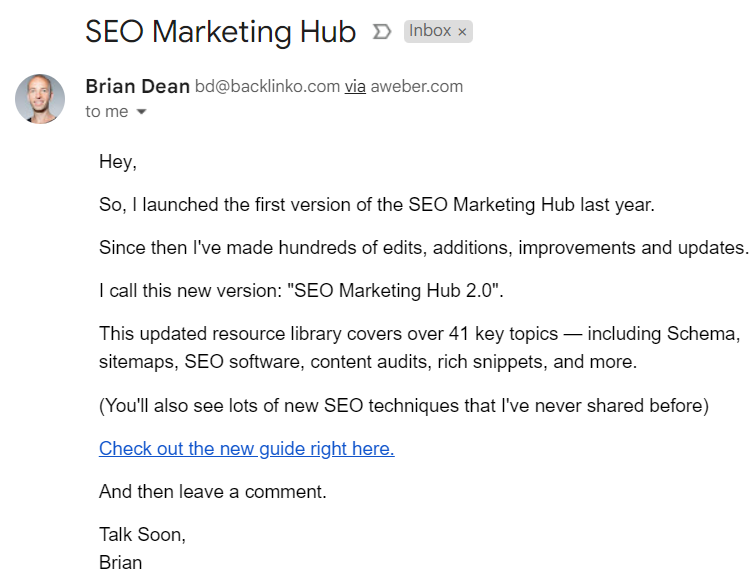
This method has been widely recommended since I first learned about email marketing in 2013. (And it still works now!)
This method of paragraphing helps with a few things:
A. Enhance readability
Short paragraphs create white space, making the email less intimidating and more accessible to scan.
B. Quick comprehension
Readers can quickly grasp the main idea of each paragraph without feeling overwhelmed by large blocks of text.
C. Mobile-friendly
Short paragraphs are easier to read on smaller screens, where long paragraphs can require excessive scrolling.
9. Get them to reply to your email
Getting your subscribers to reply to your email (especially the welcome email) is not just about increasing engagement; it also helps improve future inbox delivery rates.
Email service providers (ESPs) like Gmail and Outlook use engagement metrics, including open rates, to gauge the relevance and quality of emails.
If your subscribers don't open, click, or otherwise engage with your emails, they will be deemed "non-relevant" to the user, which will hurt your inbox delivery rate later on.
10. Use bullet points and emojis
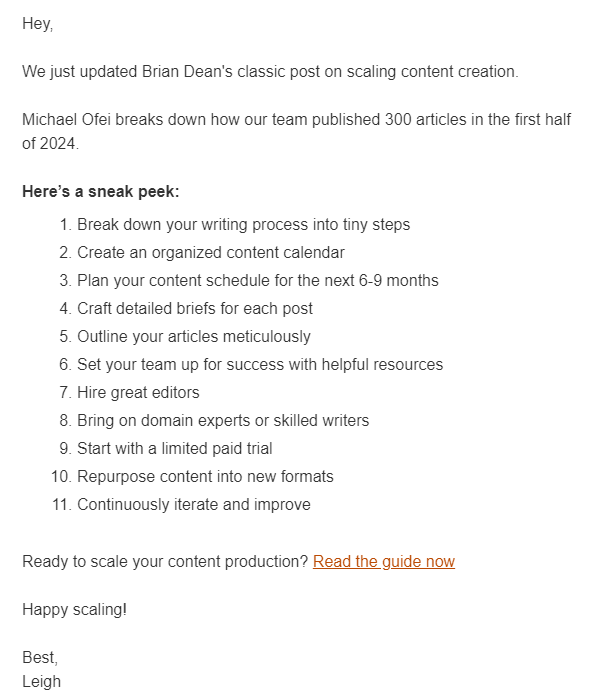
Bullet points guide the reader's eyes.
It makes it scannable and improves the reading experience.
The same goes for emojis.
Adding emojis in emails can add an extra personal touch to emphasise your points.
11. Remove non-open or non-active subscribers
It is called list hygiene in email marketing.
It may seem harmless to leave inactive subscribers on your list, but did you know that having too many can negatively impact your sender reputation and deliverability rates?
A common mistake people make is either hoping these inactive subscribers will one day open their emails or being unwilling to accept the loss of an email address.
That would require another strategy, called a "List re-activation" campaign series, where you send a few emails to this inactive list and ask whether they still want to be on the list or would prefer to be removed.
Anyway, don't worry about inactive email addresses; focus on the quality of your list, not just quantity.
Final Thought
Email marketing professionals are key players in the digital marketing landscape.
Their work not only involves crafting engaging emails and analysing data but also improving companies' profits and margins without incurring additional advertising costs.
What other best practices do you think should be in this list?
Member discussion